










At the 3rd Stord Summit, Dan Frommer from The New Consumer delivered a keynote that fundamentally changes how we should think about consumer behavior in today's market. His presentation connected dots as to why anxious consumers are actually more convertible, not less, when brands get the experience right.
The New Consumer’s research on the collision between technology, sentiment, and American spending habits revealed that while consumer sentiment is sinking, spending continues to climb. E-commerce just hit $1.2 trillion, doubling in just five years, despite nearly half of Americans believing we're in a recession.
Their Consumer Trends Survey, which tracks 3,000 consumers every few months, confirmed this pattern. Anxious shoppers aren't spending less; they're redirecting their money toward channels that reduce friction and increase confidence. And increasingly, those channels are AI-driven.
How Economic Anxiety Creates New Barriers
The keynote revealed that anxiety doesn't stop people from wanting things; it just makes every decision feel heavier. Even small purchases now come with a mental checklist: “Do I really need this? Is this responsible?”
Then there’s the justification burden. Some purchases trigger the need to explain to a partner, a budget spreadsheet, or your future self. Every dollar feels like it has a shadow version that could have gone toward savings or debt. That opportunity cost makes even small choices stressful.
Add endless options to the mix, and decision fatigue kicks in. People don’t stop wanting the product; they just find the process exhausting. So they stall. They research more, compare more, read more reviews, and often walk away without buying.
This shows how anxiety changes the rules rather than killing demand. Shoppers gravitate toward environments where the right choice feels obvious, validated, and quick. Because in this climate, friction is a deal-breaker.
Why AI-Powered Channels Win Anxious Buyers
The findings demonstrated exactly why platforms like TikTok Shop and Amazon are dominating anxious buyers. TikTok Shop generated over $500 million1 in U.S. sales during Black Friday Cyber Monday weekend alone. Its strength lies in collapsing discovery, validation, and purchase into seconds.
The AI-driven feed doesn’t just display products. It demos them through creators, surrounds them with social proof, and enables purchase with a single tap. No long consideration cycle. No checkout form. No time for doubt.
Compare this to traditional e-commerce, which moves through multiple steps:
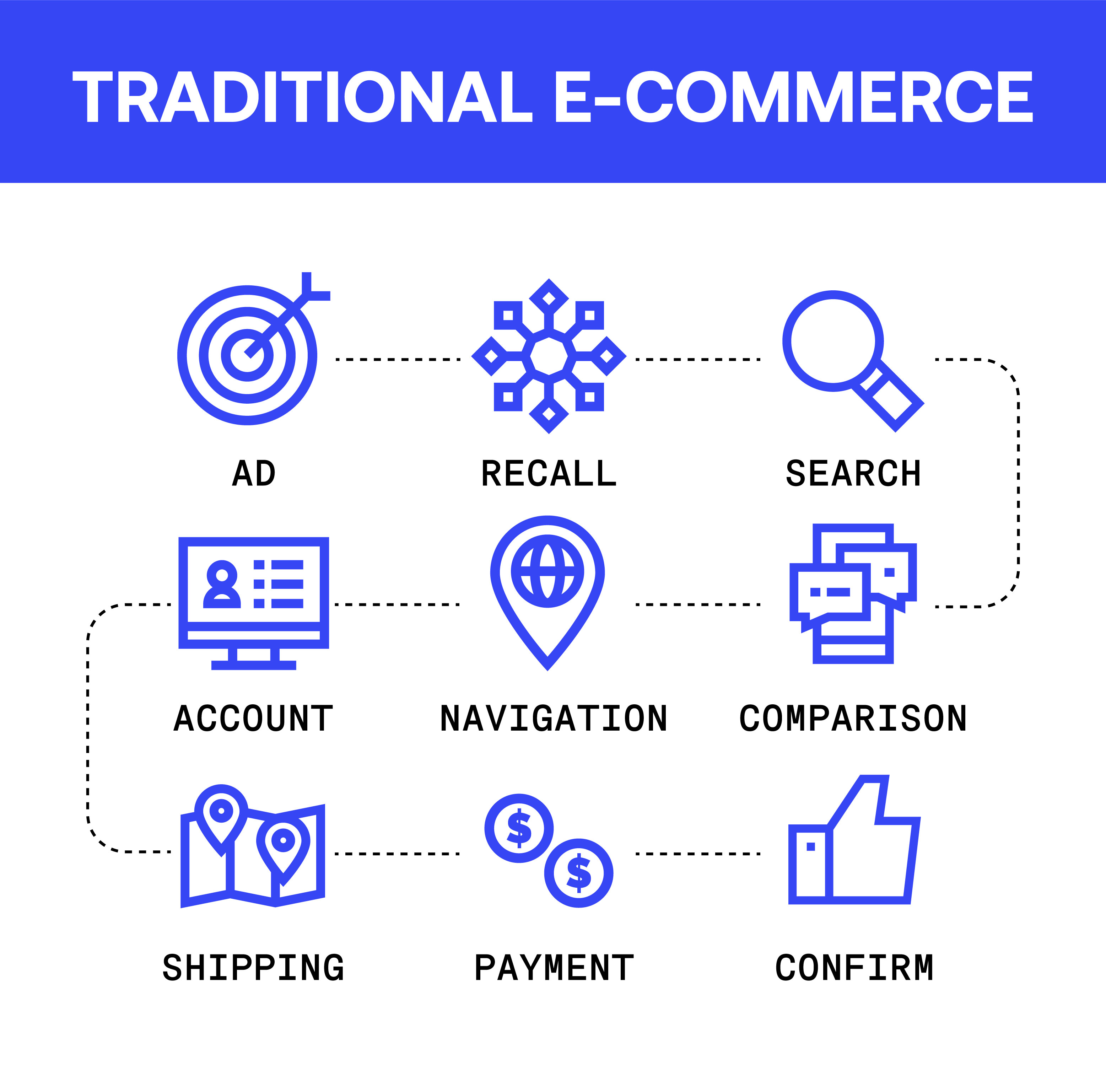
That’s seven chances to lose an anxious shopper. TikTok has virtually none. As the presentation put it, it's “Gen Z’s QVC,” but unlike traditional QVC's scripted hosts and phone-in orders, TikTok’s commerce is native to culture, creator-driven, mobile-first, and socially validated.
Amazon plays a different game: reassurance at scale. It retains 70% of monthly active users not because it’s the cheapest, but because it feels like the safest choice. Three-quarters of consumers believe Amazon has the best selection. Two-thirds believe it has the best prices. Whether that's always true doesn't matter; the perception removes the need to compare shops.
Meanwhile, ChatGPT has quietly become the research engine for anxious shoppers, now with over 800 million users.2 Two-thirds of Gen Z use it to double-check purchases, and it rolled out its own AI shopping assistant for Black Friday.3 For younger consumers, AI advisors are now among the top five most trusted sources, twice as influential as they are for older generations.
This threatens Amazon’s “default destination” status. When the buying journey starts with a prompt instead of a search bar, everything changes.
If AI can’t find your product, or can’t explain why it’s worth choosing, you’re basically invisible. Most brands write descriptions for people, with emotional, marketing-driven language. AI, on the other hand, wants structured data: specs, use cases, comparisons, reviews. Without that, it just points shoppers elsewhere.
Generational Differences and the Looming Power Shift
One of the most compelling points of the keynote was the generational differences and the looming power shift. Right now, purchasing power is inverted from future potential.
During Black Friday Cyber Monday weekend, Boomers dominated at $13.2 billion, followed by Gen X at $12 billion, Millennials at $10.6 billion, and Gen Z at just $1.2 billion.4
But Gen Z grew 12.9% year-over-year, fastest of any generation. Their buying power is limited by college debt and early-career earnings, but they’re building habits that will compound over decades. Brands overindexing on Boomers and Gen X risk being unprepared when spending power shifts.
Gen Z discovers brands through TikTok and YouTube and cross-checks everything on Reddit. They’re skeptical of polished marketing. They gravitate toward trend-forward basics and avoid high-ticket items that require long, stressful decision cycles.
Millennials are the most optimistic about AI and are deeply influenced by creators. Half have purchased products because of a podcast ad. But they’re fatigued by subscriptions; subscription walls trigger immediate resistance.
Gen X and Boomers trust institutions more than creators. They expect clear contact information and generous return policies, and find minimalist sites untrustworthy. Apps requiring downloads or two-factor logins are quickly abandoned. And more importantly, they can afford big-ticket purchases. Boomers alone spent $730 million on electronics over Black Friday weekend.4
Economic anxiety is universal. But purchase behavior and long-term value are not. Brands focusing only on today’s biggest spenders risk being irrelevant when the power curve shifts.
How to Compete in an AI-Dominated Marketplace
Here are the key takeaways from Dan’s keynote presentation:
Prioritize AI Discovery Over Your Website
ChatGPT handles 21% of information-seeking queries now, just like Google. That percentage is expected to double within a year, then double again.
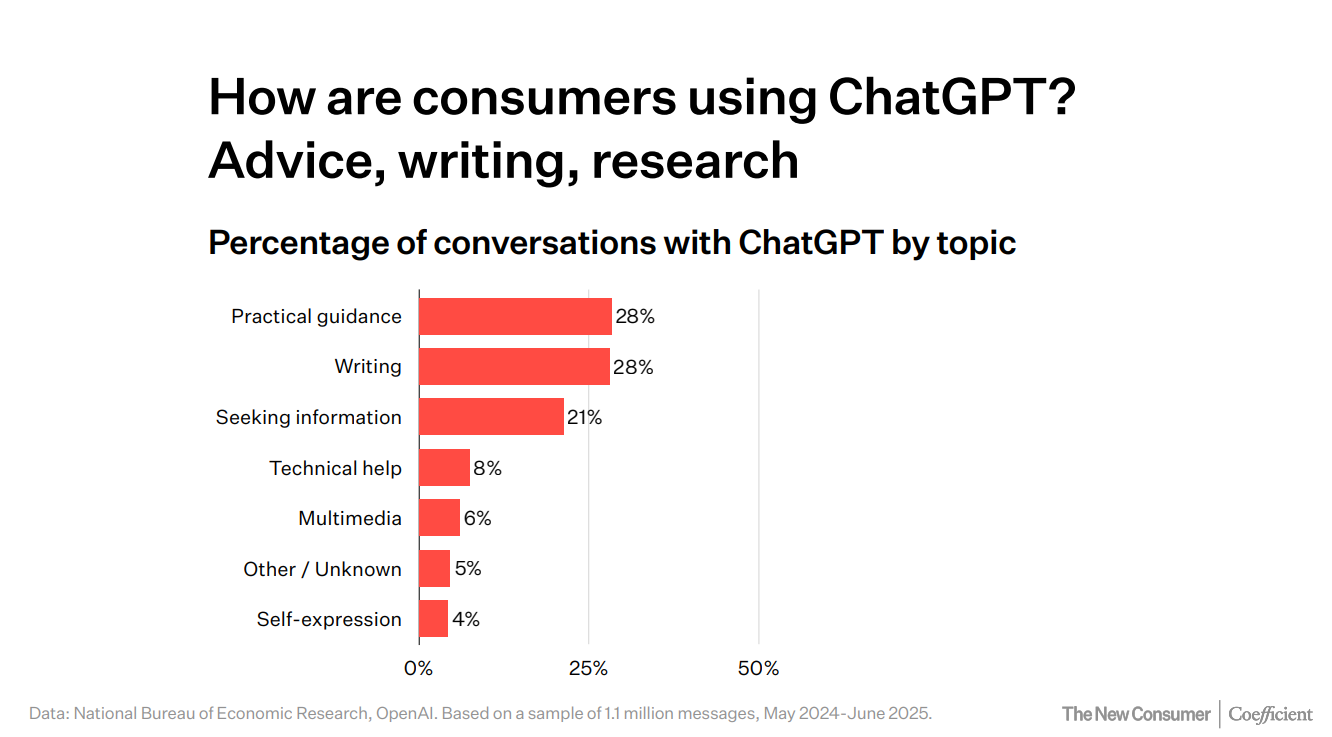
If AI can’t find your product, explain why it’s better, or recommend it confidently, you’re basically invisible on the fastest-growing discovery channel. The brands that show up in AI recommendations aren’t just writing for people; they’re structuring their product information so machines can understand it.
That means clear specs, real use cases, and honest comparisons. Less brand voice, more clarity. This isn’t just a tweak to marketing. It’s a real shift from persuading humans to helping AI explain your product for you.
Ruthlessly Eliminate Friction
Map every step between discovery and completed purchase. How many clicks? How many form fields? How many page loads? Each one is a moment where anxiety kills the sale.
Winning brands don’t make shoppers jump through seven steps. They keep it to one or two. TikTok Shop is simple: see it, tap it, buy. Amazon does the same: search it, one click, done. If your checkout still requires account creation, you’ve already lost the anxious buyer.
Integrate commerce where attention exists. If your customers are on Instagram, enable Instagram Shopping. If they're researching on YouTube, put buy links in descriptions. Meet them where they are.
Build on Established Platforms
The findings pointed out that Meta AI has two-thirds awareness despite being functionally weaker than ChatGPT. Distribution beats functionality.
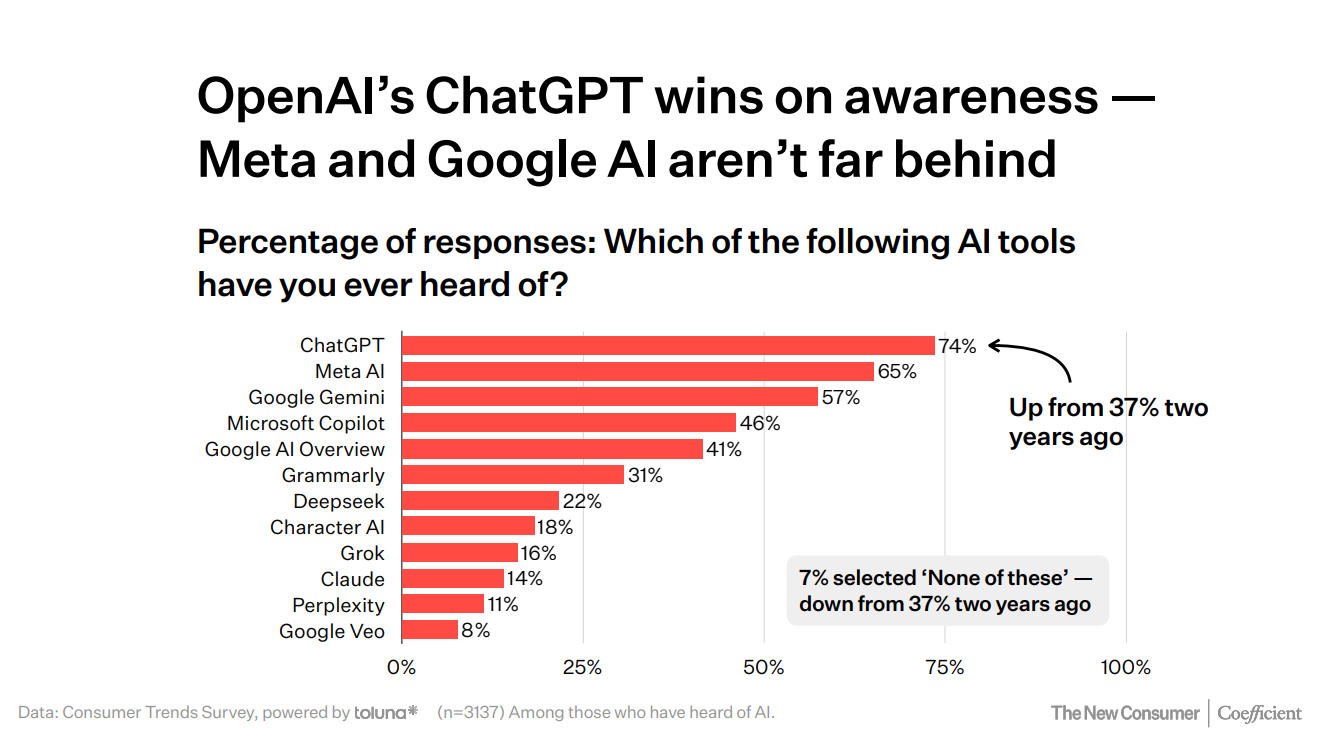
Google and Meta reach billions daily. Building on their platforms beats building standalone experiences requiring consumer effort to discover. Too many brands invest in proprietary apps fighting uphill against platforms consumers already trust.
If your strategy is “drive traffic to our site,” you're competing against the default behavior of anxious consumers: sticking with platforms they know.
Invest in Creator Relationships, Not Just Ads
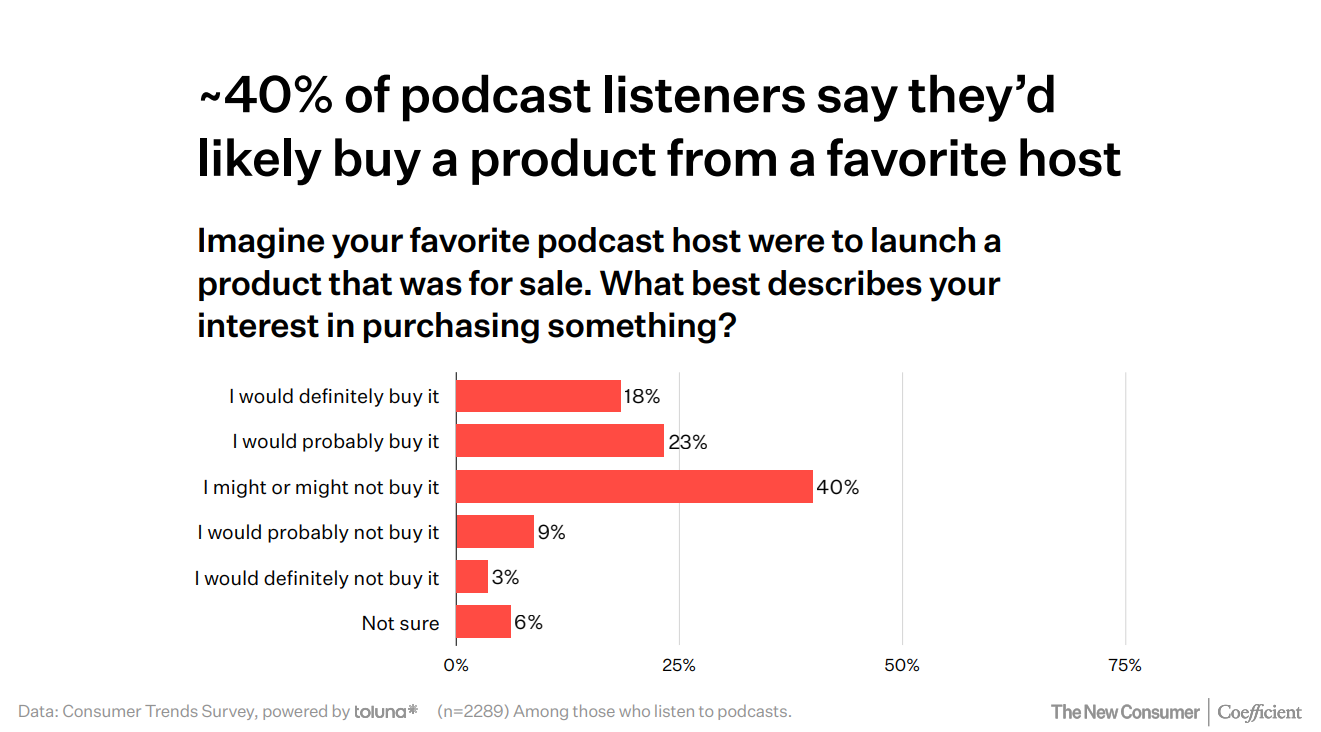
Half of Gen Z and Millennials purchased something because of a podcast ad, because someone they trust endorsed it. 40% would buy from their favorite podcast host. That’s distribution through trusted advocates who’ve already built trust for you.
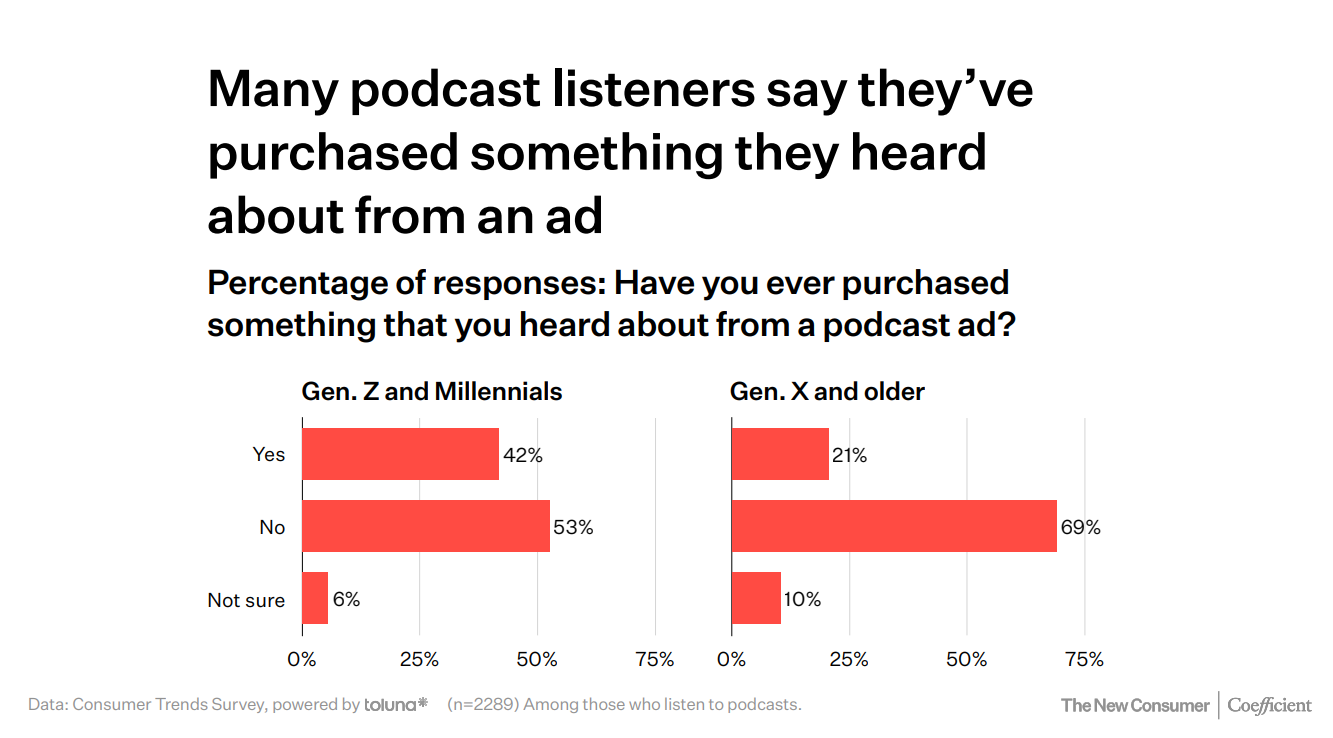
Find creators your customers already trust. Give them products. Let them use them authentically. Pay for endorsement, not scripted talking points. One authentic creator recommendation reaches anxious buyers more effectively than a million impressions from interruptive ads.
Build Trust Through Reduced Friction
It’s not something you ask for. You build trust by eliminating every reason not to trust.
If customers research obsessively, as they should, make the information they need instantly accessible. Use AI, tutorials, and detailed reviews. Provide validation before they even ask for it.
When uncertainty arises, remove it. Offer easy returns, display real-time inventory, and be transparent with pricing. Give customers confidence at every decision point.
Anxious customers won’t wait for friction. Make buying effortless: one-click checkout, saved payment methods, auto-filled forms. Remove every obstacle so worry never has a chance.
They trust people, not institutions. Collaborate with creators they follow, let trusted podcasters endorse you, and appear in the AI tools they consult. Don’t ask for trust—borrow it from voices they already believe in.
Toward an AI-Shaped Consumer Economy
If there’s one thing the keynote made abundantly clear, it is that consumers are worried about money—but that worry is not stopping them from spending. It is simply reshaping how they spend.
The brands winning today are not waiting for confidence to rebound. They understand that anxious buyers are actually easier to convert when friction is removed. Companies built for AI-driven discovery and effortless purchasing are capturing resilient demand and building loyalty through seamless, reliable experiences.
Anxious buyers are not the problem. Friction is. Remove it and you do more than capture a sale. You turn worry into trust and trust into loyalty that lasts well beyond the current economic uncertainty.
For e-commerce brands, the question is not whether consumers will buy, but whether you are making it simple enough for them to say yes.


